
For years, she called it a “mystery pain”—a line of electric discomfort tracing from her inner ankle, up her leg, and coiling deep into her groin. Scans showed nothing. Stretches provided only fleeting relief. During her first Thai massage session, the practitioner’s thumb began following that exact invisible pathway with uncanny precision. “This is the Sen Kalathari line,” he explained calmly. As he worked, the sensation shifted from sharp pain to a profound, warming release, as if a blocked river had suddenly broken free. Tears welled in her eyes. “It feels like I’m remembering something my body knew long ago,” she whispered. This awakening speaks to a shared, ancient wisdom: beneath our muscles and bones flows a subtle anatomy of life force. In Thailand, these channels are Sen Lines (Sen Sib). In the yogic tradition of India, they are Nadis. While born from different cultures, both systems map the same profound truth: to heal the body deeply, we must work with these hidden rivers of energy.
The Ten Vital Currents: Understanding the Sen Lines of Thai Massage
Traditional Thai Medicine describes 72,000 Sen Lines, with ten primary channels considered most vital for therapeutic practice. Unlike muscles, you cannot dissect a Sen Line; you feel its flow—or its blockage—through practiced touch. These lines are conceived as pathways for Lom (wind or vital energy), connecting major acupressure points, organs, and the surface of the body.
Key Sen Lines for Therapists and Clients:
- Sen Sumana: Running from the perineum up the center of the torso to the tongue. It is the central channel, governing digestion and heart function.
- Sen Ittha & Pingala: Flanking Sumana, these left and right channels start at the nostrils and flow to the navel. They govern the lateral symmetry of the body and are crucial for treating headaches and balancing energy.
- Sen Kalathari: Perhaps the most famous in bodywork, this is a “grid-like” line running from the navel to the extremities. It treats systemic pain, numbness, and is the line often referenced for sciatic-like pathways. Working with Kalathari is a cornerstone of the therapeutic touch we cultivate in our practice.
- Sen Sahatsarangsi & Thawari: Running down the arms, these lines influence heart and lung function, and are essential for treating shoulder and arm tension.
In a Thai massage session, the practitioner uses palms, thumbs, elbows, and feet to apply rhythmic pressure, perform gentle stretches, and “open” these lines. The goal is to release stagnated Lom, restore flow, and create a state of deep, meditative relaxation where the body’s innate intelligence can rebalance.
The 72,000 Pathways: Exploring the Nadis of Yoga
The yogic anatomy system, detailed in texts like the Hatha Yoga Pradipika, describes a similar network of 72,000 Nadis (Sanskrit for “flow” or “channel”). These are conduits for Prana (life force energy). While the map differs, the principle is identical: blockages in these subtle channels lead to physical stiffness, mental fog, and emotional imbalance.
The Three Principal Nadis:
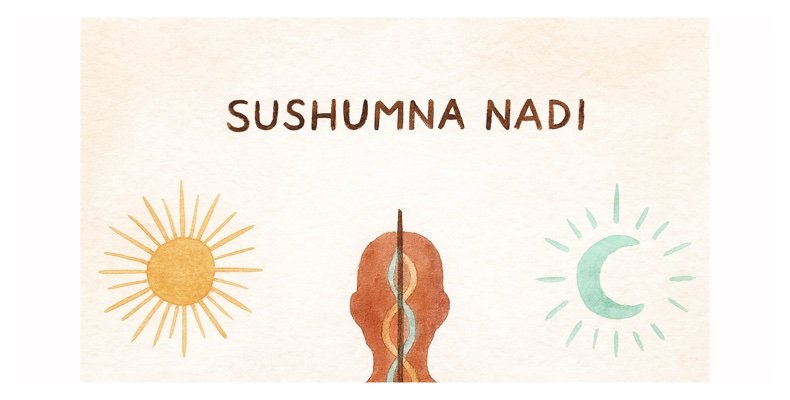
- Sushumna: The central channel running along the spine, from the base to the crown of the head. It is the pathway to spiritual awakening, dormant until the two flanking nadis are balanced.
- Ida: The lunar channel, winding to the left of Sushumna. It is cooling, feminine, and governs mental processes, relaxation, and the parasympathetic nervous system.
- Pingala: The solar channel, winding to the right of Sushumna. It is heating, masculine, and governs physical vitality, action, and the sympathetic nervous system.
Yoga practices aim to purify and balance the Nadis. Asana (postures) removes physical blockages. Pranayama (breath control) directly directs and clears Prana. Meditation stills the mind, allowing energy to flow unimpeded into Sushumna. This holistic purification is what leads to the experience of vibrant health and expanded consciousness in yoga.
A Tapestry of Similarities: Where Sen Lines and Nadis Converge
Despite different cultural origins, the parallels are profound and speak to a universal human understanding of embodiment.
- Central Channel Authority: Both systems honor a primary central channel (Sen Sumana / Sushumna Nadi) as the core of our energetic architecture.
- Bilateral Symmetry: Both describe crucial left and right channels (Sen Ittha/Pingala / Ida/Pingala Nadis) that must be balanced for health.
- Breath as the Key: In yoga, breath is the vehicle for Prana. In Thai massage, the practitioner’s movement is synchronized with the client’s breath, and Lom is considered closely related to the respiratory system. This makes breathwork a universal bridge; learn to harness it in our guide to Breathwork for Energy Regulation.
- The Goal of Flow: The ultimate purpose in both is to remove obstructions so that vital energy can circulate freely, eliminating pain, enhancing vitality, and fostering mental calm.
The Practical Synthesis: Integrating Wisdom for Modern Healing
For a modern practitioner or a dedicated student of self-care, this integrated map is revolutionary.
- In Your Yoga Practice: Understand that a tight hip in Pigeon Pose may be more than a muscular issue; it could be a blockage in the Sen Kalathari line or where the Ida/Pingala Nadis cross. Breathe into the sensation to clear it.
- In Bodywork & Self-Massage: Use a tennis ball or your own hands to apply steady pressure along the pathways of key Sen Lines—like tracing Kalathari down the leg—to release deep-held tension that stretching alone cannot reach.
- In Meditation: Visualize energy flowing freely through these channels. Focus on the central pathway (Sushumna/Sumana) to cultivate profound calm and centeredness.
- In Holistic Diagnosis: Persistent issues along a specific path (e.g., recurring pain along the inner arm) can be seen through both lenses—as a Sen Line blockage or a Nadi disturbance—guiding a more targeted healing approach.
Ultimately, studying Sen and Nadis together dissolves the illusion of separation—between traditions, body energy, you and auniverse. It invites you to experience yourself not as a static collection of parts, but as a living, pulsing network of luminous energy. To touch these lines is to remember your own wholeness. Begin the sacred work of clearing the rivers so your fullest life force can shine through.
Hungry for more lifechanging wisdom? Read more articles on intuitive massage, touch and holistic healing arts:
- Beyond the Muscle: How Myofascial Release Therapy Unlocks Your Body’s Deepest Healing
- Ukeru & Reru: The Sacred Balance of Receiving and Giving
- Finding Balance: A Story of Yin and Yang in Modern Life