
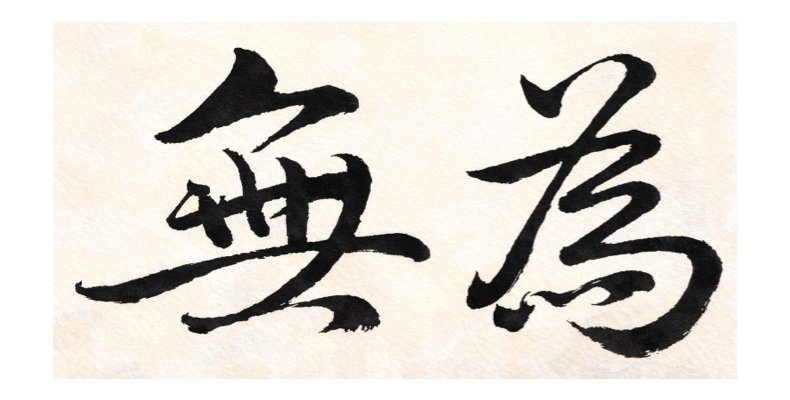
Leo, a dedicated bodywork student, approached every technique with intense focus and forceful effort. He believed mastery meant perfecting each movement. However, his own shoulders stayed tight, and his touch often felt mechanical. His breakthrough came not from trying harder, but from discovering an ancient principle: Wei Wo Wei.
Wei Wo Wei is a profound expression of the central Taoist concept of Wu Wei (無為), which translates not to “inaction,” but to “effortless action” or “action without forcing.” It is the art of aligning our efforts with the natural flow of life, energy, and circumstance. For a healer, it represents the shift from doing therapy to someone to facilitating healing within them.
The Philosophy of Action in Harmony with Nature
Imagine a skilled sailor. They do not fight the wind or command the waves. Instead, they carefully adjust the sails to harness the wind’s natural power, moving with grace and efficiency. This is Wei Wo Wei. It teaches us that true power and effectiveness come from understanding and cooperating with the inherent patterns—the Tao—around us, rather than imposing our will through brute force.
In the context of healing and bodywork, this philosophy is transformative. It moves the practitioner away from being a “technician” who applies protocols and toward becoming a “facilitator” who listens and responds to the unique, intelligent system of the client’s body.
Striving vs. Flowing
Leo’s journey mirrored this shift. Initially, his approach was one of striving. Learning Wei Wo Wei guided him toward flowing. The difference is clear:
| Aspect | The Striving Approach (Forced Action) | The Flowing Approach (Wei Wo Wei) |
|---|---|---|
| Intention | To fix a problem, achieve a specific outcome. | To create the conditions for the body’s innate healing to emerge. |
| Touch Quality | Directed, goal-oriented, often deep and static. | Attuned, receptive, listening, often gentle and dynamic. |
| Practitioner’s State | Mentally active, analyzing, “doing.” | Calmly present, sensing, “being with.” |
| Relationship to Client | Hierarchical; practitioner acts upon the client. | Collaborative; practitioner works with the client’s body. |
Applying Wei Wo Wei in Healing Arts
So, what does this look like in practice? For Leo, it meant learning to pause and place his hands without an agenda. He focused on feeling the quality of tissue, the rhythm of breath, and the subtle shifts in energy—the Qi—beneath his palms. His pressure became a response to what he felt, not a predetermined plan.
This principle connects deeply to other holistic frameworks. It is the essence of sensitive myofascial release, where the practitioner follows the tissue’s unwinding or intuitive energy work, like Reiki, where the practitioner acts as a conduit rather than a director. It transforms any modality from a technique into a mindful, co-creative dialogue.
Cultivating the Art of Presence @ School of Touch
At the School of Touch, the spirit of Wei Wo Wei is woven into our very fabric. Founder Bart’s mission to guide a journey of “self-discovery” relies on this non-forcing presence. We teach students the explicit science of anatomy, but we equally emphasize the implicit art of attuned listening through touch.
Our curriculum is a synthesis designed to cultivate this balance. You will master the technical facets of Western anatomy while simultaneously developing the intuitive sensitivity of Eastern energy practices. This integration empowers you to practice with wisdom—knowing when to apply skillful force and when to step back and allow, embodying true effortless action.
Hungry for more life changing wisdom? Read more articles on intuitive massage, touch and holistic healing arts:
- Ukeru & Reru: The Sacred Balance of Receiving and Giving
- Jing, Qi, Shen: The Three Gems of Consciousness in Healing Touch
- Beyond the Muscle: How Myofascial Release Therapy Unlocks Your Body’s Deepest Healing